Mental wellness app for SEA
Designing Safe Mental Wellness Interactions for Southeast Asia
- Role
- Product DesignerUX Researcher
- Timeline
- 8 weeks
- Tools
- Figma
Personal · Project · 2025
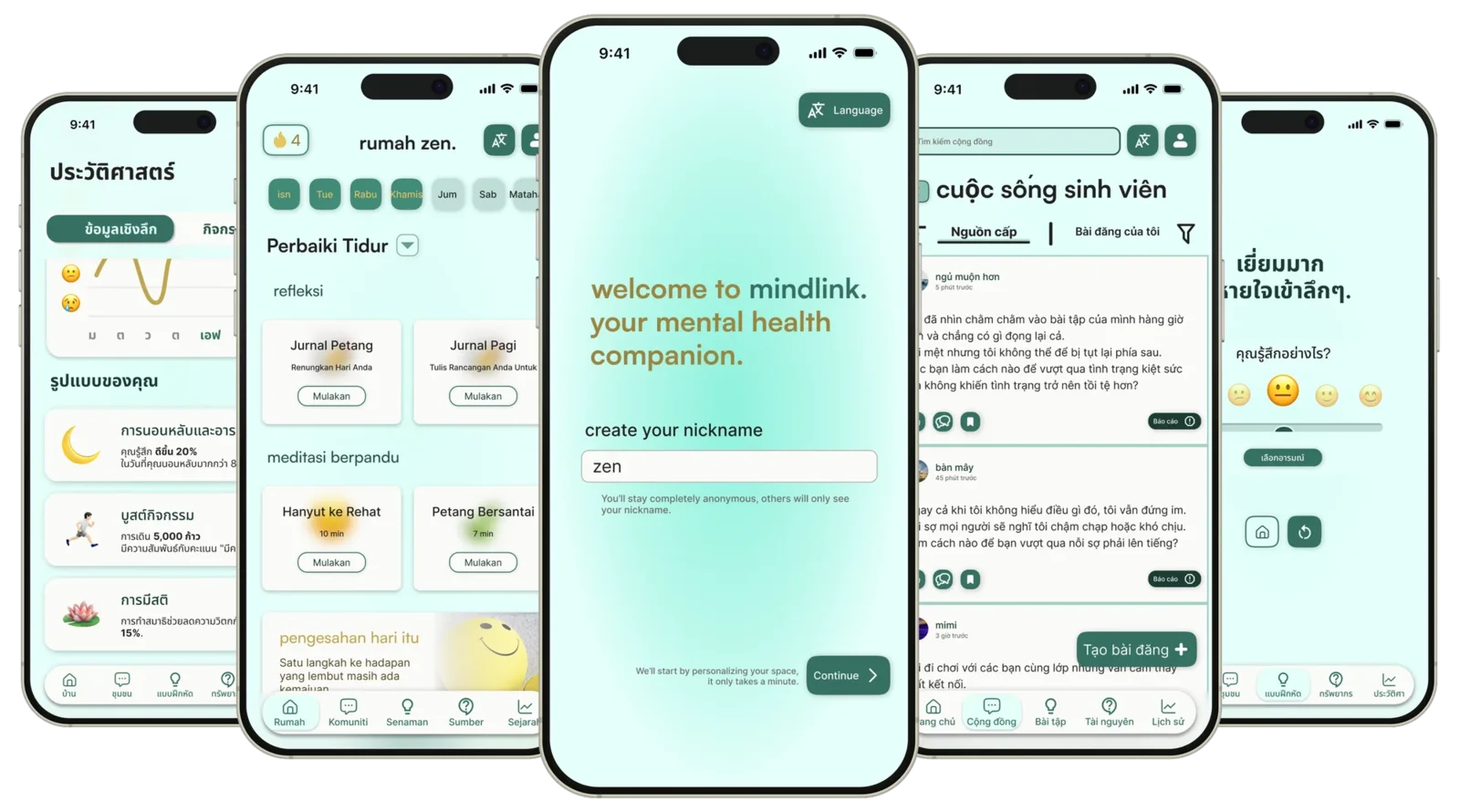
Mental health remains heavily stigmatized across Southeast Asia. Most people who need support do not seek it, not because tools are unavailable, but because those tools were built for a different cultural context. MindLink is a wellness app designed for that gap: peer-led, anonymous by default, and built around habits rather than crises.
Young adults in Southeast Asia face growing mental health challenges, but most wellness apps are not designed for their cultural and emotional realities.
Research interviews and secondary data pointed to three barriers that existing apps do not address: fear of being identified, distrust of clinical framing, and no culturally resonant entry point.
The design question shifted from "how do we help people manage mental health" to "how do we build something people in this region will actually open."
| Problem | Opportunity |
|---|---|
| Stigma prevents self-identification as someone who needs mental health support | Frame entry around daily wellbeing, not mental health labels |
| Fear of being identified within the community | Anonymous by default, with identity as an opt-in feature |
| Western app patterns do not resonate in SEA cultural contexts | Community-first structure that reflects how support is sought in the region |
| Onboarding asks too much before demonstrating value | No account required to start. Value first, commitment later |
Scope decisions were as important as the features I included. Each of these was deliberately left out of v1.
Crisis intervention tools
MindLink is not a crisis app. Adding hotlines and risk detection would shift the product's identity and require clinical oversight. Excluded to stay within the product's lane.
Therapist matching
Professional care access matters, but introducing it in v1 would require trust the product has not yet earned. A peer-first model lowers the barrier; professional pathways can follow.
Social graph features
Following, friends lists, and profile discovery would undermine the anonymity that makes community participation safe. Community is anonymous and non-social by design.
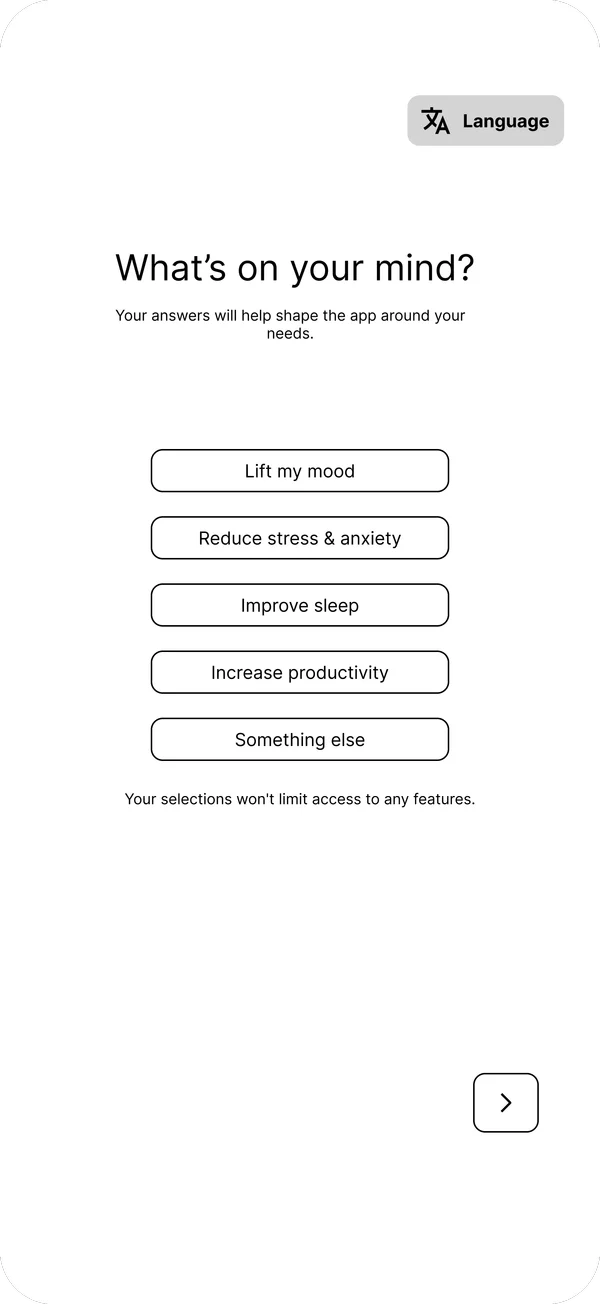
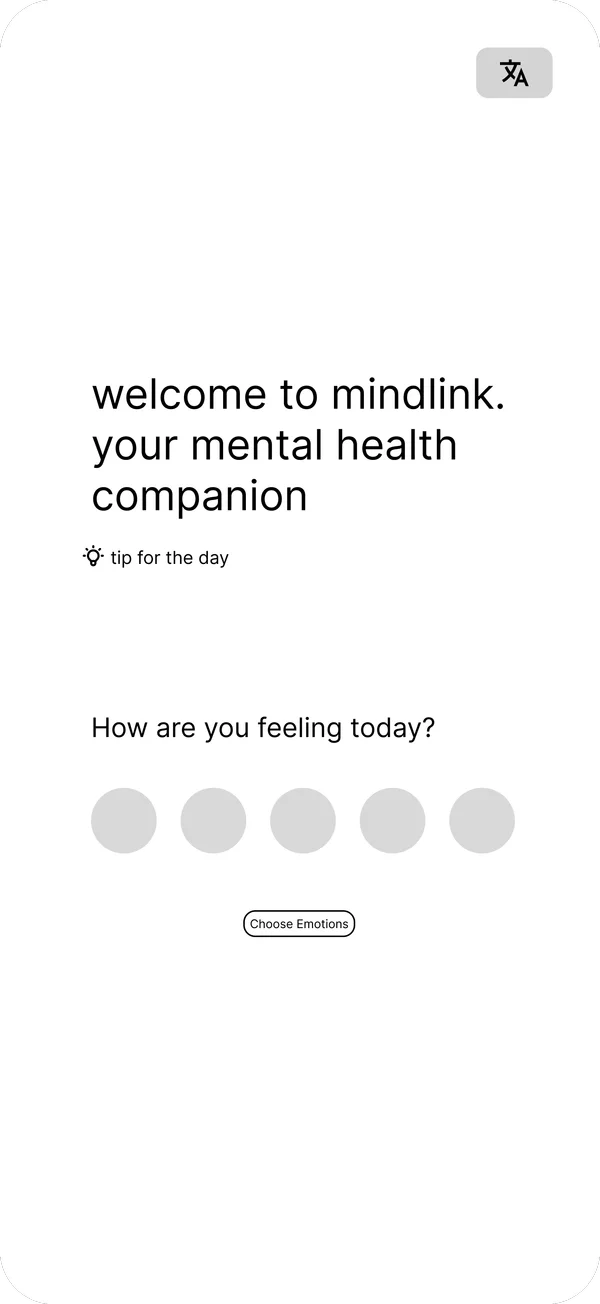
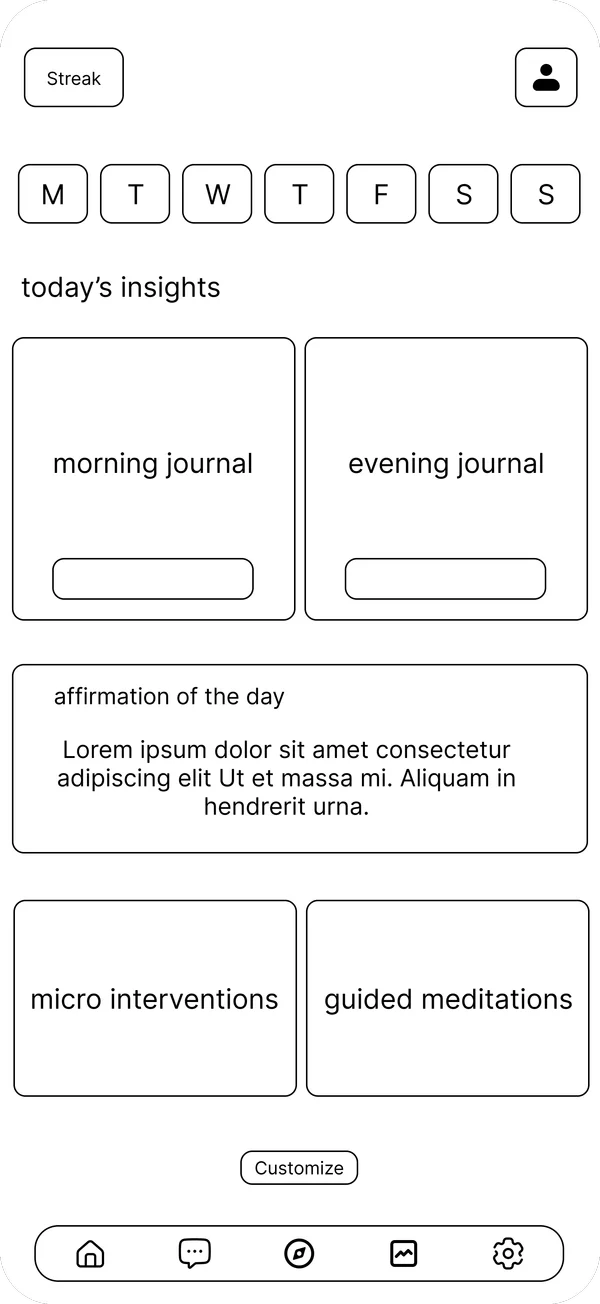
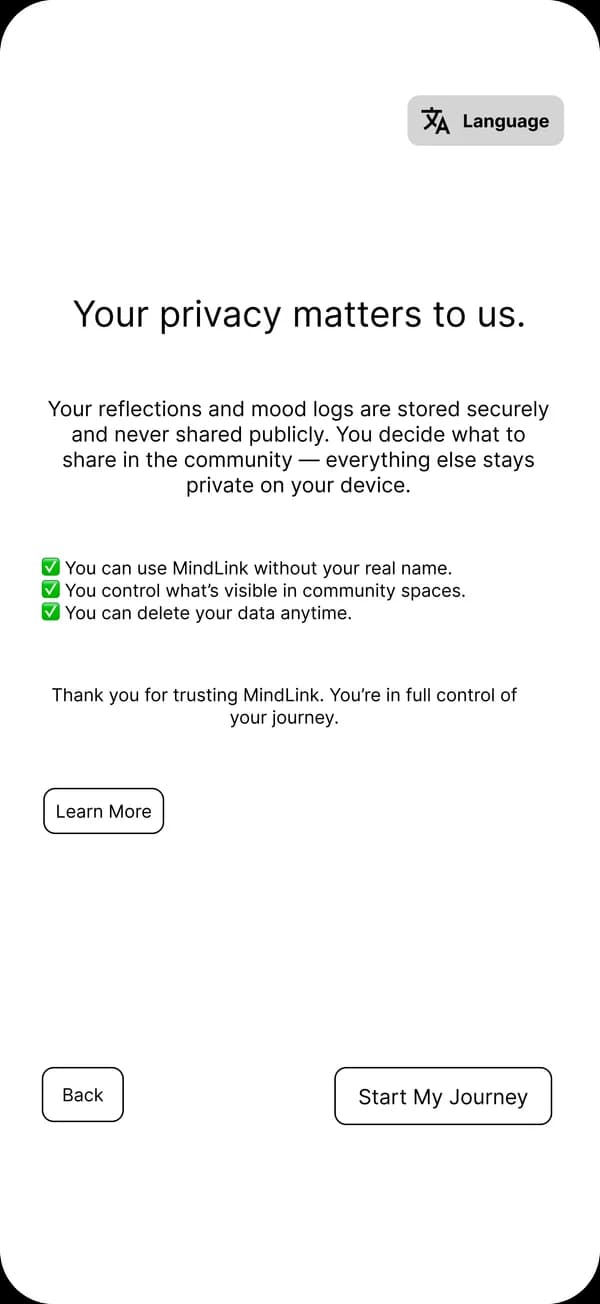
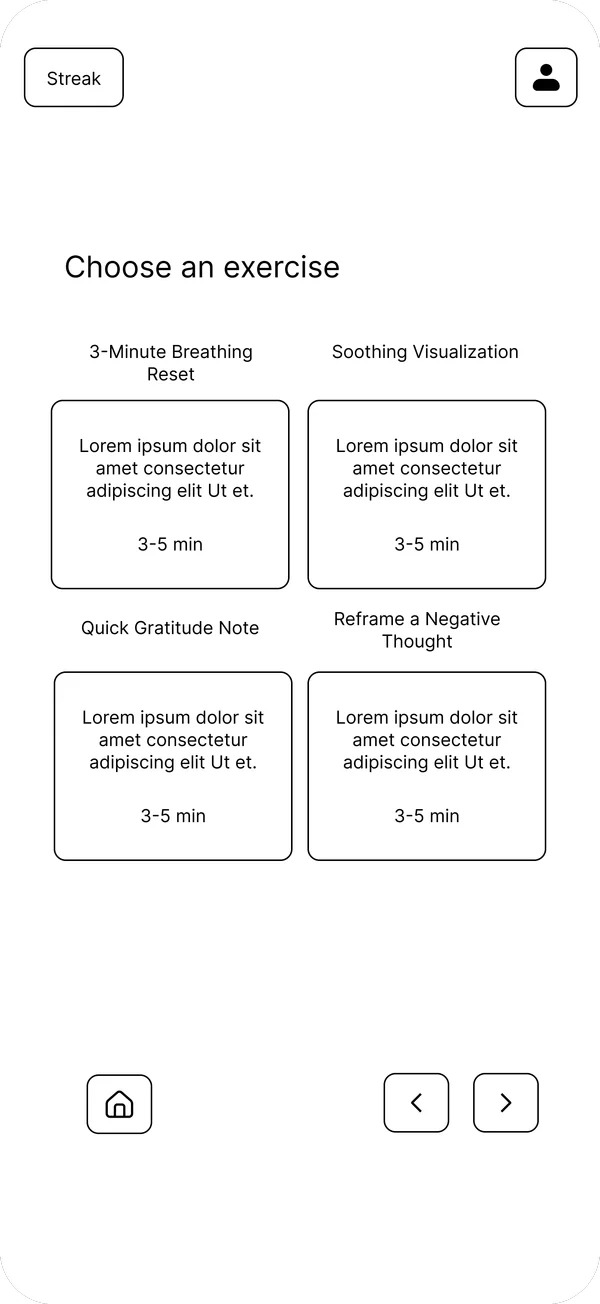
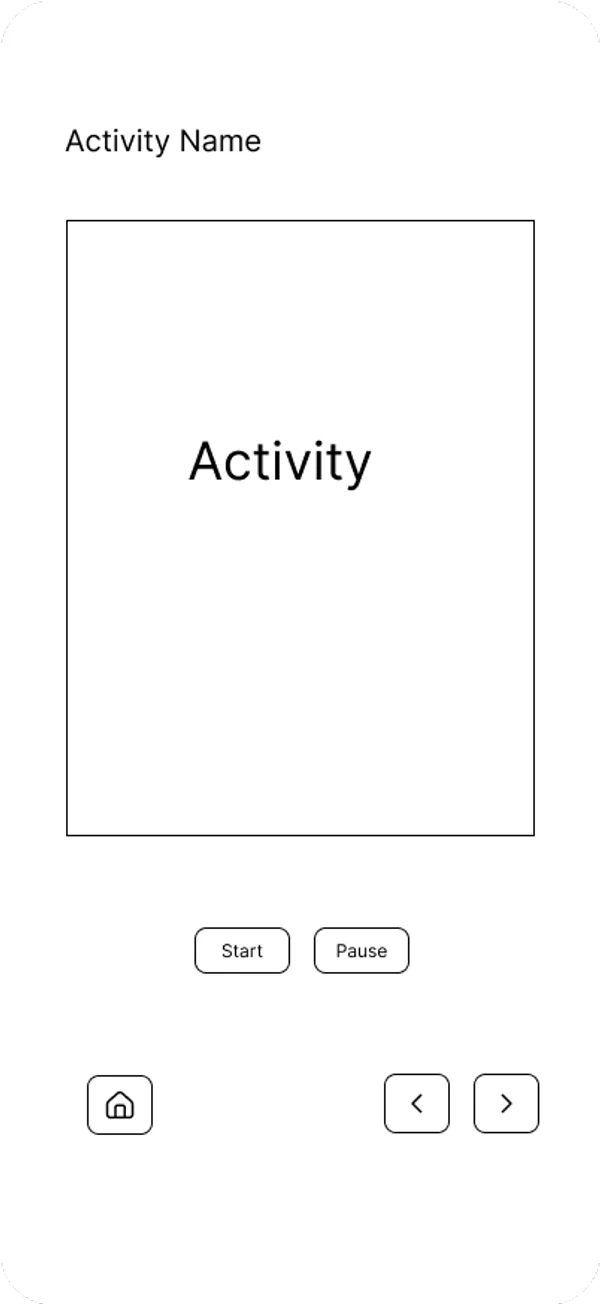
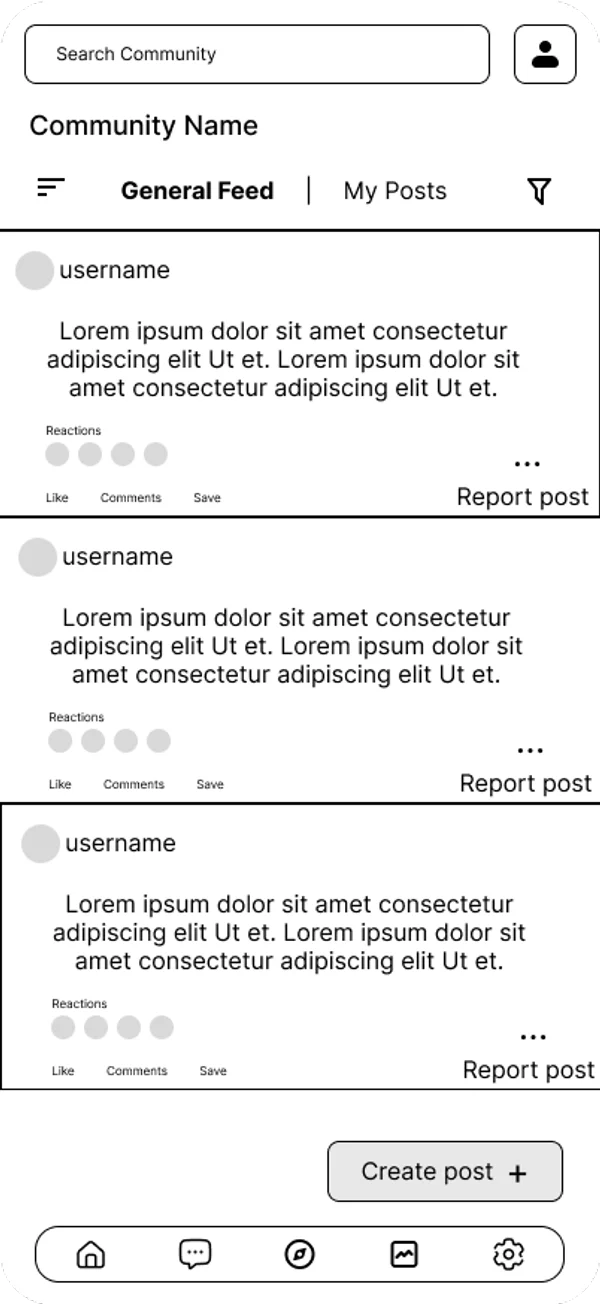
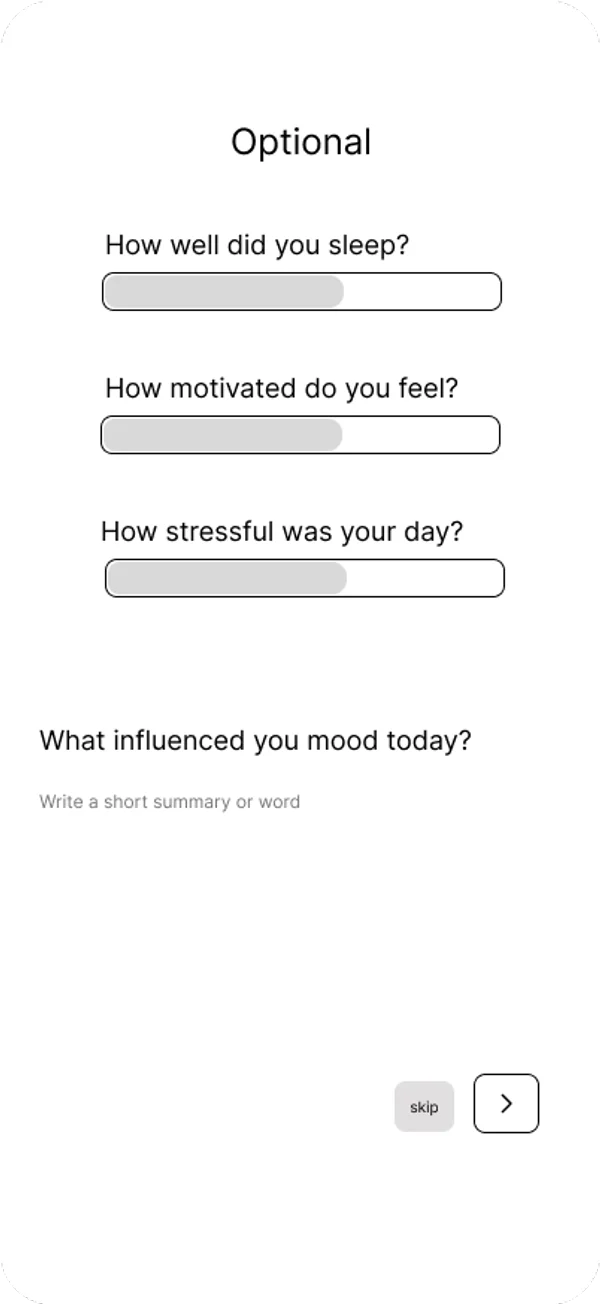
Low fidelity wireframes used to validate structure, hierarchy, and flow before visual design.
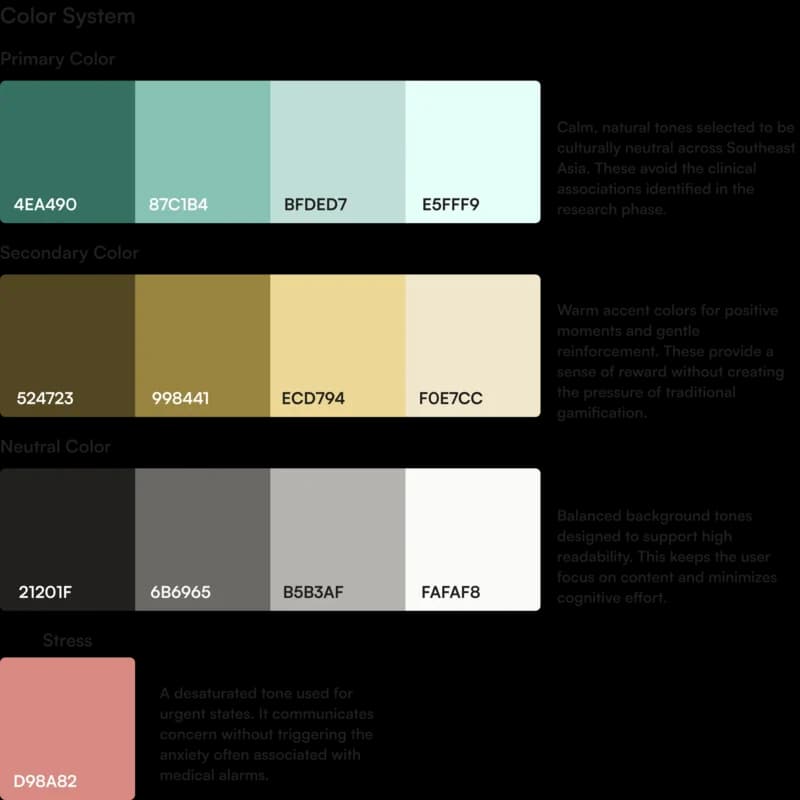
The visual language needed to feel calm and approachable without clinical coldness. Soft teal as the primary, warm neutrals for backgrounds, and rounded forms throughout.
The check-in is the product's lowest-commitment entry point. A single emoji-scale question each day, with an optional note. No account required. The data stays on device unless the user opts into cloud sync. It is designed to be a 10-second interaction that earns the right to ask more over time.
Posts are anonymous by default. No usernames, no profile photos, no follower counts. Users can share how they are feeling, respond to others, or simply read. The community is organized by topic rather than social graph, which keeps the focus on shared experience rather than individual identity.
Short, guided exercises under five minutes. Breathing, grounding, and journaling prompts. None of them are labeled as therapy or clinical exercises. They are framed as moments, not treatments. The library grows as the user completes more check-ins, tying content discovery to engagement rather than paywalls.
Four screens. No account wall. The onboarding explains what MindLink is, establishes that it is not a clinical tool, and gets the user to their first check-in in under a minute. Permissions are requested only when the feature that needs them is first used.
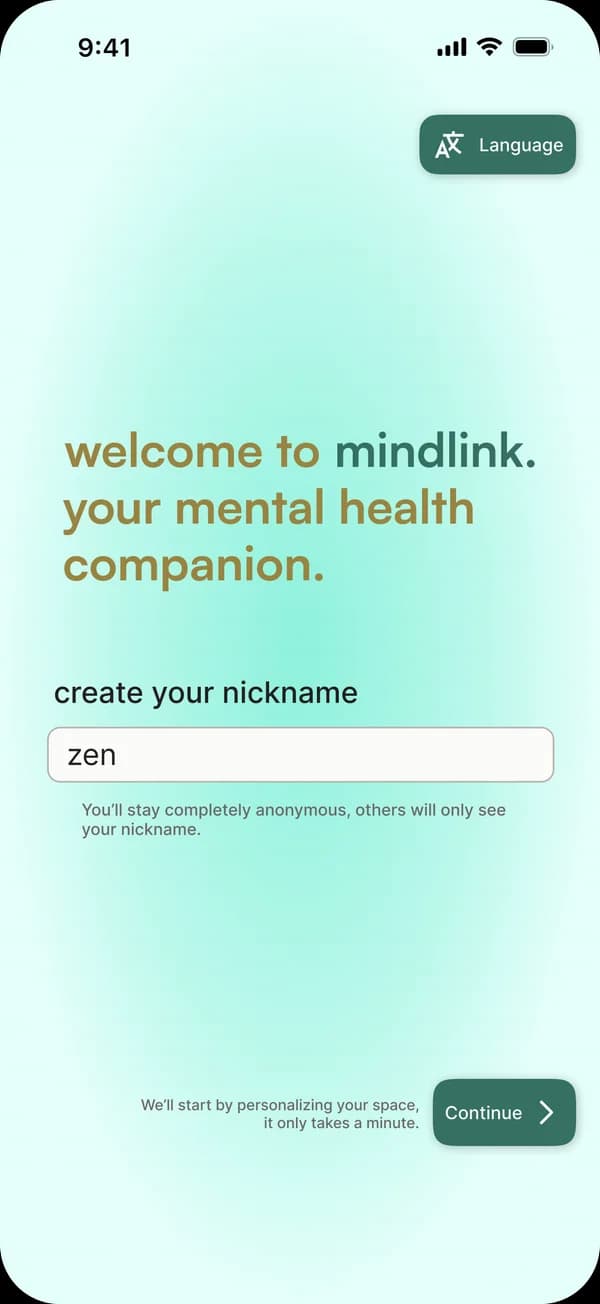
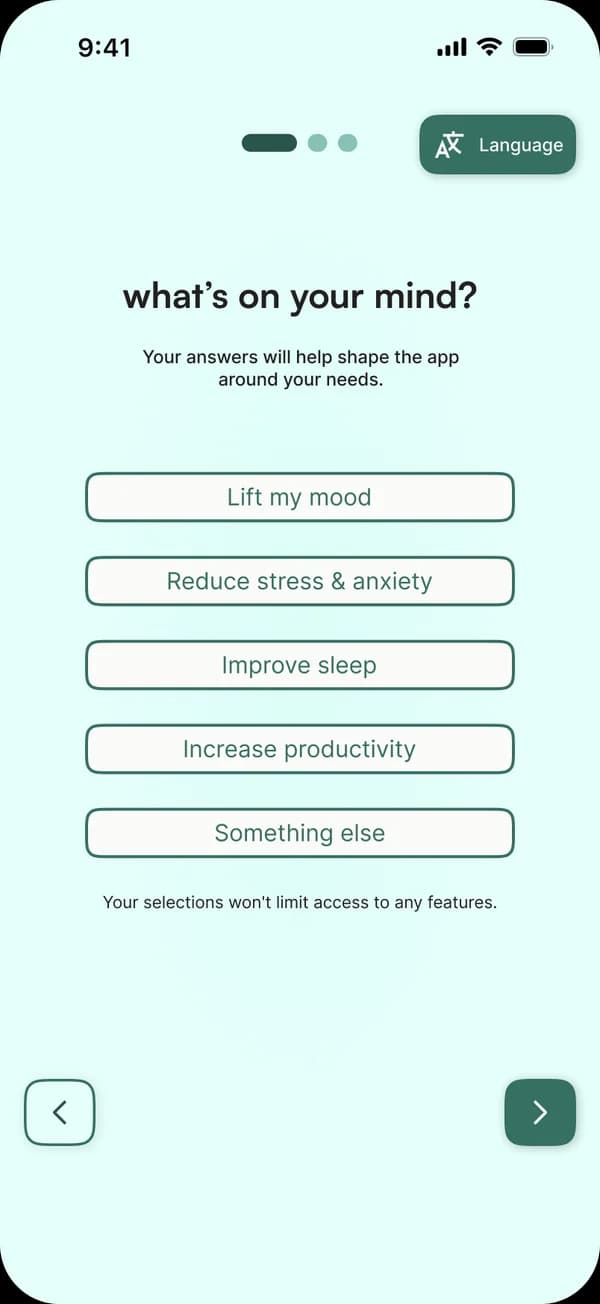
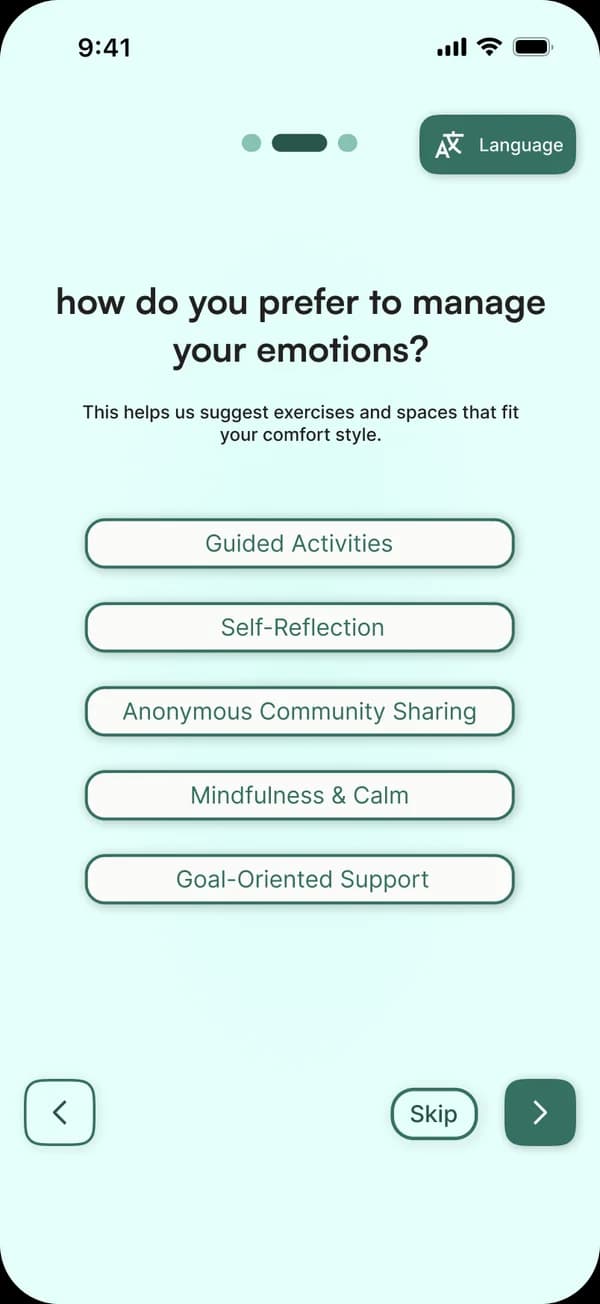
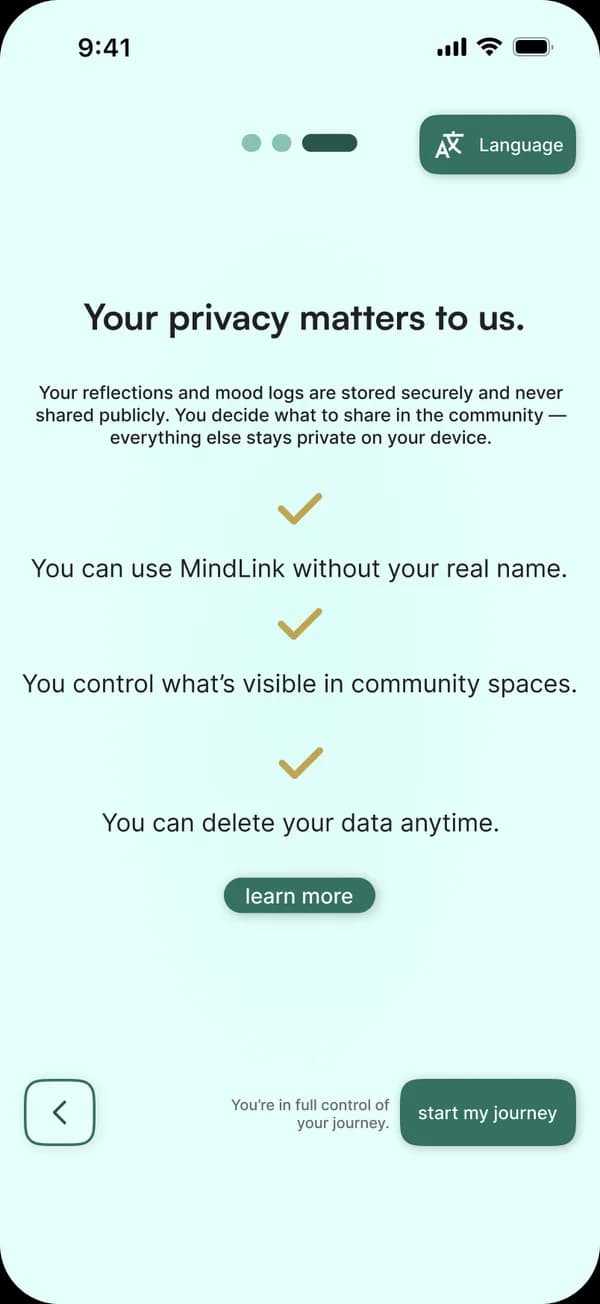
No account required. First check-in reachable within one minute.
Mood history surfaces patterns without clinical interpretation. The resources section links to vetted external support for users who want more than MindLink offers, including professional and peer helplines localized for SEA.
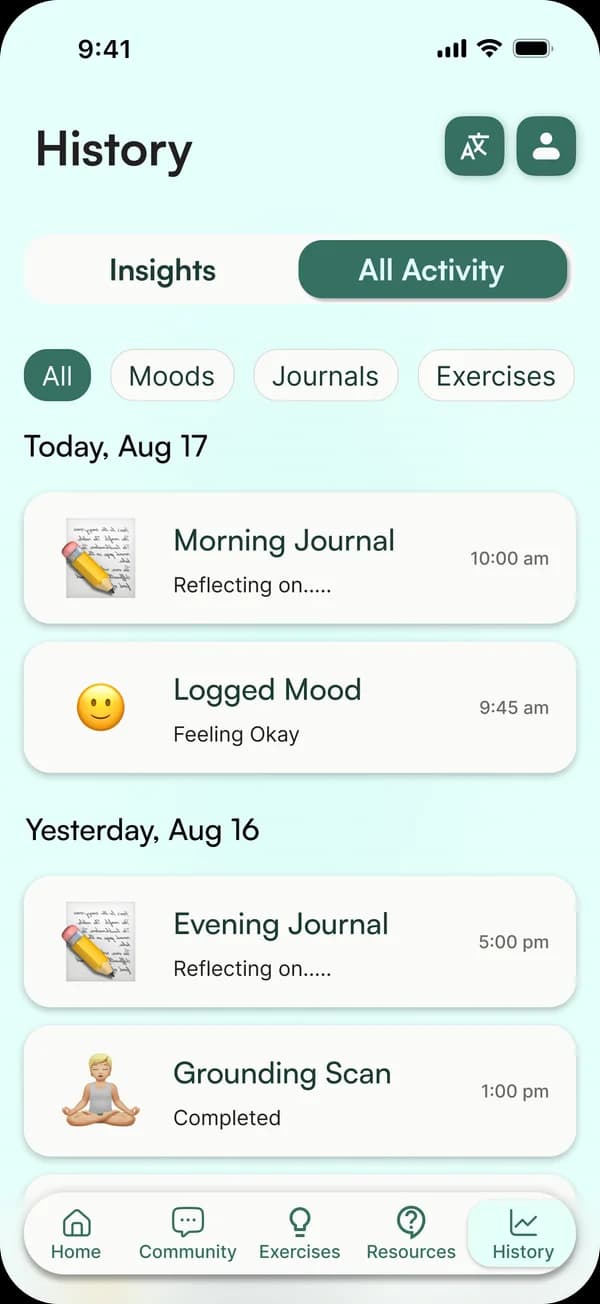
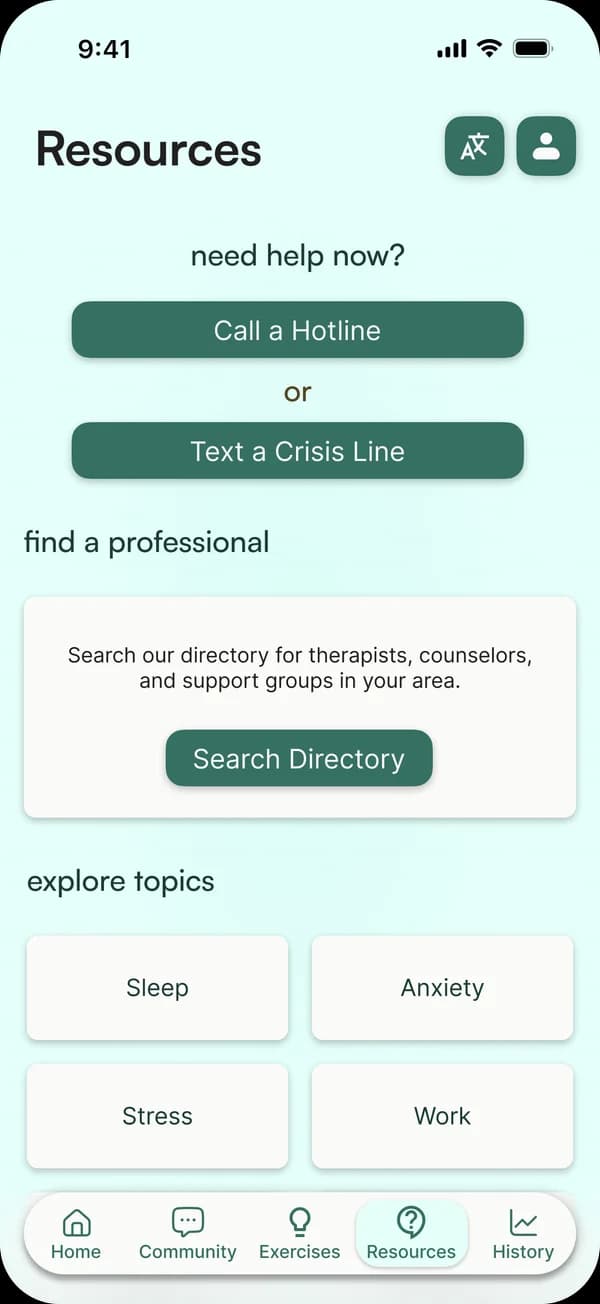
Transitions slow during high-stress moments. Micro-feedback confirms each input without urgency. Follow-up prompts adapt to the selected emotion.
Prototyping surfaced timing issues static screens could not show, calibrated motion to avoid a rushed or clinical feel, and validated the flow under real tap behavior.
Impact ranges are projected based on industry benchmarks and validated usability testing.
Higher Day 1 Activation
25–35%
A sub 10 second mood check reduces early friction and encourages first session completion.
Lower Early Abandonment
20–30%
Privacy first participation builds early trust and reduces drop off in the first week.
Reduced Reliance
10–15%
Micro interventions help users regulate stress earlier, reducing high urgency escalation.
Designing for stigma-sensitive contexts requires removing the assumption that users know they need help. When anonymity is the default and the entry point is a daily check-in rather than a crisis form, the product earns the trust it needs before it asks anything of the user.